November 22, 2023

Use the Availability Group Wizard (SQL Server Management Studio)

Applies to: SQL Server (all supported versions) This topic describes how to use the New Availability Group Wizard in SQL Server Management Studio to create and configure an Always On availability group in SQL Server 2019 (15.x). An availability group defines a set of user databases that will fail over as a single unit and a set of failover partners, …

Use the Availability Group Wizard (SQL Server Management Studio) Read More »
Tutorial: Signing Stored Procedures with a Certificate

Applies to: SQL Server (all supported versions) Azure SQL Database Azure SQL Managed Instance This tutorial illustrates signing stored procedures using a certificate generated by SQL Server.  Note To run the code in this tutorial you must have both Mixed Mode security configured and the AdventureWorks2017 database installed. Signing stored procedures using a certificate is useful when you …

Tutorial: Signing Stored Procedures with a Certificate Read More »

Database Engine Tuning Advisor

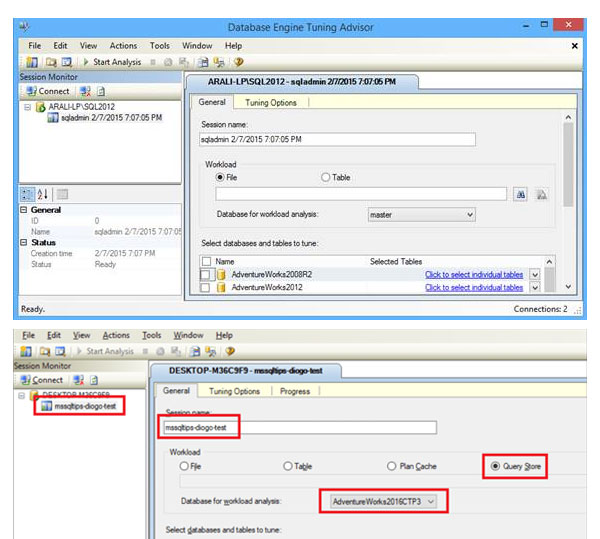
Database Engine Tuning Advisor Applies to: SQL Server (all supported versions) Welcome to the Database Engine Tuning Advisor tutorial. Database Engine Tuning Advisor examines how queries are processed in the databases you specify, and then recommends how you can improve query processing performance by modifying database structures such as indexes, indexed views, and partitioning. Database Engine …

Database Engine Tuning Advisor Read More »

Creating a Memory-Optimized Table and a Natively Compiled Stored Procedure

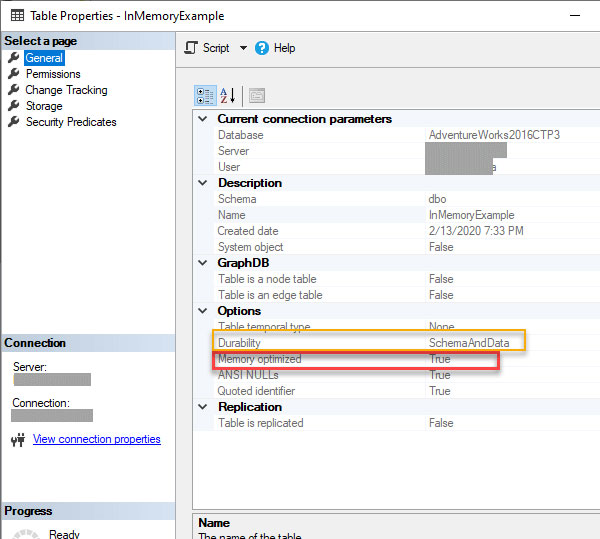
Creating a Memory-Optimized Table and a Natively Compiled Stored Procedure Applies to: SQL Server (all supported versions) This topic contains a sample that introduces you to the syntax for In-Memory OLTP. To enable an application to use In-Memory OLTP, you need to complete the following tasks: Background on In-Memory objects For information on how to use …

Creating a Memory-Optimized Table and a Natively Compiled Stored Procedure Read More »

Tutorial: Configure replication between two fully connected servers (transactional)

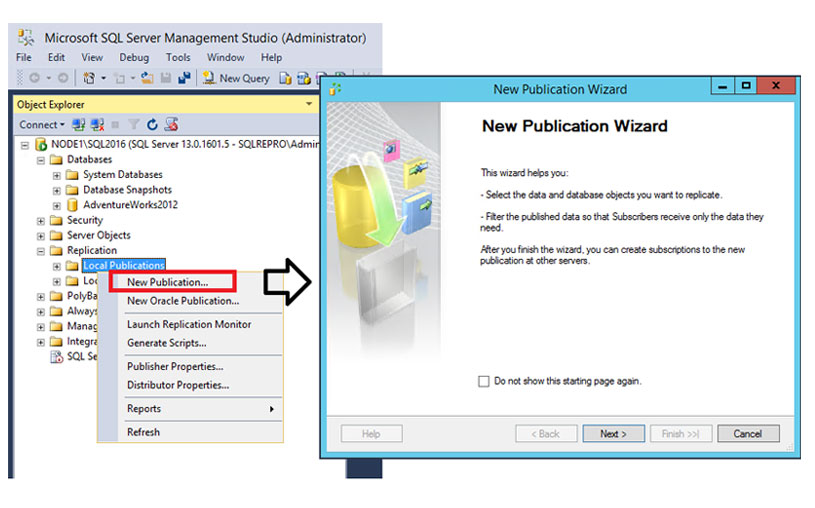
Applies to: SQL Server (all supported versions) Transactional replication is a good solution to the problem of moving data between continuously connected servers. By using the Replication Wizard, you can easily configure and administer a replication topology. This tutorial shows you how to configure a transactional replication topology for continuously connected servers. For more information about …

Tutorial: Configure replication between two fully connected servers (transactional) Read More »

Tutorial: Configure replication between a server and mobile clients (merge)

Tutorial: Configure replication between a server and mobile clients (merge) Applies to: SQL Server (all supported versions) Merge replication is a good solution to the problem of moving data between a central server and mobile clients that are only occasionally connected. By using the replication wizards, you can easily configure and administer a merge replication topology. …

Tutorial: Configure replication between a server and mobile clients (merge) Read More »

Add an Azure SQL Database to an autofailover group

Add an Azure SQL Database to an autofailover group APPLIES TO:  Azure SQL Database A failover group  is a declarative abstraction layer that allows you to group multiple geo-replicated databases. Learn to configure a failover group for an Azure SQL Database and test failover using either the Azure portal, PowerShell, or the Azure CLI. In this tutorial, …

Add an Azure SQL Database to an autofailover group Read More »

Diagnose and resolve latch contention on SQL Server

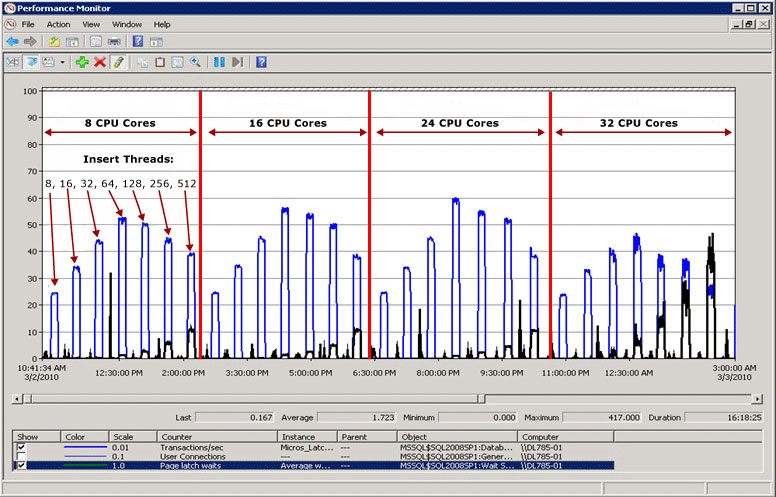
This guide describes how to identify and resolve latch contention issues observed when running SQL Server applications on high concurrency systems with certain workloads. As the number of CPU cores on servers continues to increase, the associated increase in concurrency can introduce contention points on data structures that must be accessed in a serial fashion …

Diagnose and resolve latch contention on SQL Server Read More »

Scroll to Top